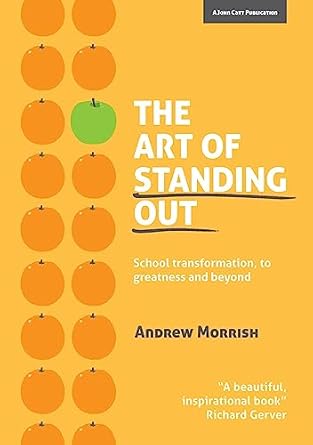

I’ve been sitting with Andrew Morrish’s The Art of Standing Out for a while now, letting its ideas settle and noticing where they resonate with my own experiences in leadership. It’s one of those books that doesn’t just offer practical advice but invites reflection and honest questions about how we show up as leaders—and why.
At its core, Morrish’s message is simple but powerful:
leadership isn’t about power or control; it’s about creating the conditions where others can thrive.
That idea feels obvious when you read it, but it’s not always easy to put into practice, especially in environments where expectations are high and time is limited.
Leadership Starts with Belief and Purpose
One of Morrish’s most resonant ideas is that belief drives leadership. What we believe shapes how we lead—whether we realise it or not. Equally important is recognising and challenging our limiting beliefs, the ones that quietly undermine our confidence and hold us back from meaningful change.
Recently, I found myself questioning whether a new initiative I was introducing would gain traction with my team. I hesitated, not because I lacked preparation, but because an underlying belief whispered, “What if this isn’t enough?” Reflecting on Morrish’s point reminded me that these quiet doubts can shape how we show up as leaders.
Morrish also stresses that values, not styles or resources, are what keep schools moving forward. Leadership isn’t about perfection; it’s about being anchored in a moral purpose, even when things feel uncertain or chaotic.
Takeaway: Leadership begins with clarity about our beliefs and the courage to act on them, even when it feels uncomfortable.
Reflection Question: What belief is currently shaping your leadership, and is it serving or limiting you?
Growth Happens in the Right Conditions
Morrish emphasises that real change doesn’t happen overnight. Schools aren’t mechanical systems to be ‘fixed’; they’re living communities that need time, trust, and consistency to grow.
One of the most helpful insights was the importance of creating the conditions for change rather than forcing it. I was reminded of a time when I introduced a new approach to team planning. Initially, I expected immediate adoption and visible results. But, looking back, I realise I hadn’t created enough space for the team to feel safe experimenting and adjusting to the change.
Morrish talks about establishing a strong foundation—or a ‘base camp’—before scaling change. This phase often feels slow and invisible, but without it, any momentum risks collapsing under pressure.
The NICER framework also stood out to me as a thoughtful tool for ensuring learning remains meaningful, relevant, and connected to students’ experiences. It’s not about adding more—it’s about focusing on what truly matters.
Takeaway: Change happens when people feel safe, supported, and trusted to grow.
Reflection Question: Are the conditions in your team or school helping people feel safe to innovate and grow?
Perspective Matters
Morrish uses the metaphor of climbing high to scan the horizon to describe the perspective leaders need. It’s about stepping back regularly to see the bigger picture, identify patterns, and notice opportunities that aren’t visible in the day-to-day.
But perspective isn’t just about looking forward—it’s also about looking back. Morrish highlights that progress isn’t always linear, and it’s important to pause and notice how far we’ve already come.
I’ve been trying to practice this more intentionally. After a particularly challenging term, I sat down with my team and we reflected not just on what didn’t work, but on the small wins we’d achieved. It shifted the tone of our conversation from frustration to one of quiet pride and renewed focus.
At the same time, Morrish acknowledges that chaos and randomness are part of growth. Leadership often means navigating uncertainty while staying anchored in purpose.
Takeaway: Stepping back to see both the bigger picture and the incremental progress helps leaders stay grounded and focused.
Reflection Question: When was the last time you paused to recognise how far you and your team have come?
Final Thoughts: Small Steps, Big Impact
One line from Morrish feels like a mantra for leadership: “If you can, you should, and if you’re brave enough to start, you will.”
Sometimes, the hardest part of leadership is simply starting—whether it’s initiating a difficult conversation, introducing a new approach, or challenging an entrenched assumption. Courage often begins with taking that first step.
For me, reading The Art of Standing Out wasn’t about discovering entirely new ideas but about seeing familiar challenges through a sharper lens. It prompted me to slow down, revisit my core beliefs, and think carefully about how I’m creating the conditions for others to grow.
Moving forward, I’m keeping three key questions close:
- Are my actions aligned with my values and beliefs?
- Am I creating an environment where growth feels safe and possible?
- Am I stepping back regularly to gain perspective
 Gemma Archer
Leave a comment