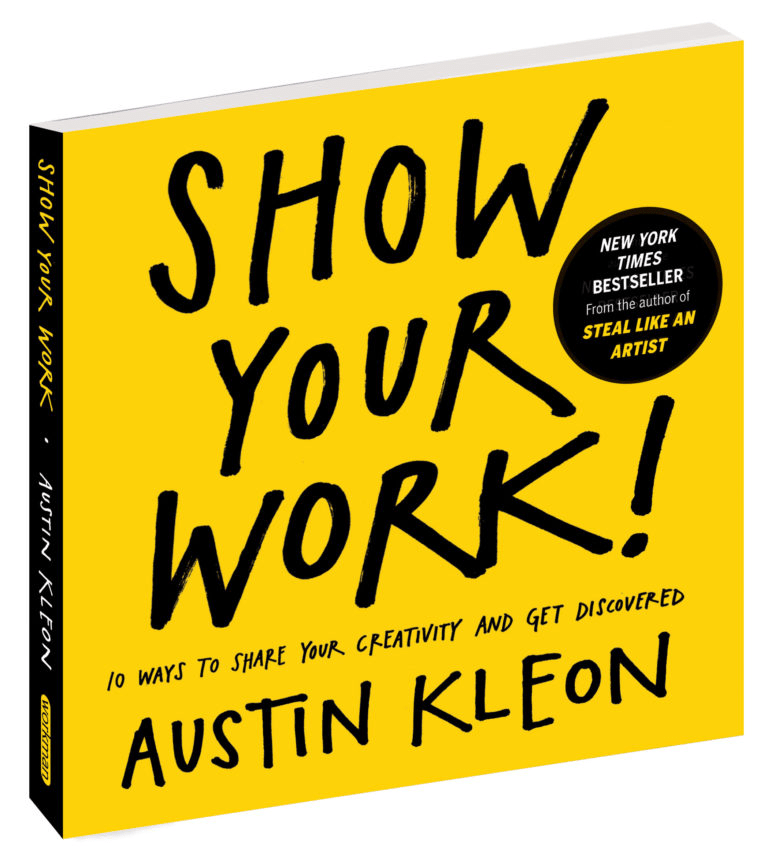
My thoughts after reading Show Your Work by Austin Kleon.
I frequently hesitate to share my work before it feels ‘finished.’ Perfectionism sneaks in, convincing me to hold back even when I know better. It’s something I often talk about with students—how embracing the messy middle can lead to growth and learning—but I also struggle to practise it myself.
For a long time, I questioned whether I had anything worth sharing. The fear of not having a polished result or groundbreaking idea made it easy to stay silent. Austin Kleon’s words felt like a direct challenge to these hesitations:
“How can you show your work even when you have nothing to show? Scoop up the scraps and shape them into something shareable.”
This reframing was a turning point. It wasn’t about having all the answers or a perfect product, it was about finding value in the scraps, the fragments of progress and the lessons hidden in the process.
In the past, I might have dismissed these scraps as unimportant. Now, I see them as opportunities to connect and grow. Each small, imperfect step I share feels like a quiet defiance of self-doubt and a commitment to valuing the process itself. So here I am, taking a risk and focusing on progress over perfection. Let’s see where it leads.
Process over perfection
Creativity isn’t about polished results. It’s an evolving practice. Kleon encourages us to share the effort, mistakes and lessons behind our work invites connection and collaboration.
“By letting go of our egos and sharing our process, we allow for the possibility of people having an ongoing connection with us and our work”
This reminds me of Stephanie Miller’s “process over perfection” message from a professional workshop a few years ago. In leadership, I’ve found that focusing on the process brings people together. Whether refining a new initiative or collaborating on a project, sharing the messy middle builds trust and creates a shared sense of purpose.
Letting go of perfectionism is uncomfortable, but it’s allowing me to see my work, and myself, with fresh eyes. And that feels worth the effort.
Authenticity creates connection
Sharing openly doesn’t mean oversharing. Kleon reframes authenticity as embracing imperfection as a way to find your voice:
“The only way to find your voice is to use it. Talk about the things you love. Your voice will follow.”
Over the past year, I’ve challenged myself to share ideas before they feel “ready.” Each time I’ve leaned into this vulnerability, whether sharing lessons learned, half-formed ideas or lingering questions, I’ve been surprised by how this authenticity sparks connection.
Authenticity isn’t about having all the answers. It’s about showing up with intention and saying: “This is what I’m working on, and this is what I care about.”
Sharing as generosity
One of Kleon’s most transformative insights for me is seeing sharing as an act of generosity:
“The act of sharing is one of generosity—you’re putting something out there because you think it might be helpful or entertaining to someone on the other side of the screen”
This perspective helped me reframe self-promotion as an opportunity to create impact. Sharing isn’t about seeking attention, it’s about offering value. By sharing my ideas and insights, I invite others to engage, challenge, and build upon them, creating ripples beyond my immediate circle.
“The impulse to keep to yourself what you have learned is not only shameful, it is destructive. Anything you do not give freely and abundantly becomes lost to you.”
This mindset shift made sharing about abundance, not fear of judgment. It also challenged my instinct to hold back, reminding me that generosity can start small and still make a difference.
Building community
Creativity thrives in collaboration. Kleon describes this as an “ecology of talent”—a network of shared growth and mutual inspiration:
“Good work isn’t created in a vacuum, and that creativity is always, in some sense, a collaboration, the result of a mind connected to other minds.”
I’ve experienced this firsthand when working with teams. When middle leaders co-facilitate professional learning sessions, their collective energy always leads to outcomes greater than any individual effort. Sharing our processes openly strengthens these connections and can contribute to a culture of shared ownership and innovation.
By opening ourselves to collaboration, we create space for others to contribute their ideas, making the work richer and more impactful.
Why sharing matters
Sharing your work isn’t about showing off (this is a note for me alone!), it’s about inviting connection, inspiring curiosity and normalising the imperfections of growth.
So here’s my messy middle: I’m still learning to share my process, find my voice and make my invisible work visible. Balancing vulnerability with intention is an ongoing challenge, but each step is helping me create momentum and build self-trust.
By focusing on progress over perfection, I hope to bring more creativity into my work.
How might you do the same? What scraps could you scoop up and share today? Your imperfect progress might inspire someone else to start.
 Gemma Archer
Leave a comment